
Grengin didn’t start as a product idea. It started as a pattern - one I kept seeing on consulting engagements that, on paper, had nothing in common. A mid-sized law firm. A regional bank. A logistics company with a 40-person ops team. Different industries, different stacks, different problems. But somewhere around the third meeting, the same conversation would surface, almost word for word:
“We’re paying for it. People aren’t really using it. And the people who are using it just want to ask questions.”
Sometimes the “it” was Microsoft 365 Copilot. Sometimes it was a self-hosted LibreChat deployment that the platform team was quietly dreading. Either way, the gap was the same: organizations were buying - or building - heavyweight AI infrastructure for what turned out to be a lightweight need.
That gap is what Grengin exists to close.
The Copilot conversations
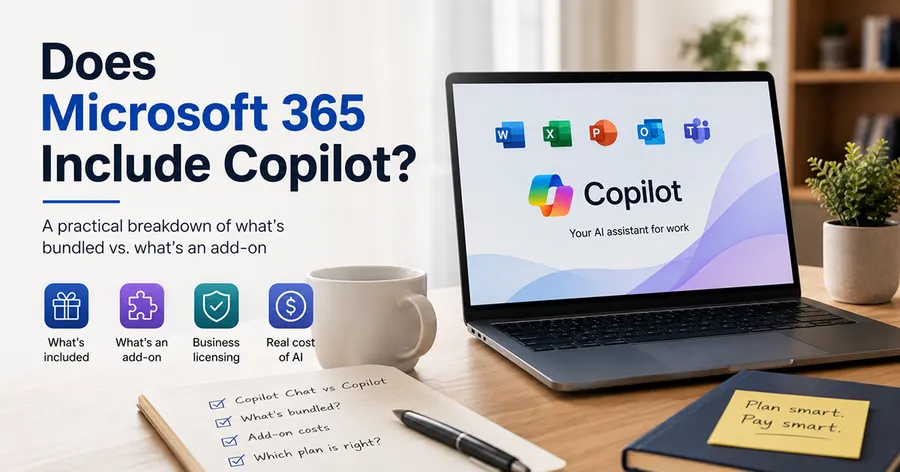
I lost count of how many times I sat in a room while someone - usually a director, occasionally a VP - walked me through their Copilot rollout with the kind of forced optimism you only hear when something expensive isn’t quite working.
The pitch they bought was beautiful: AI woven through Word, Excel, Outlook, Teams. Summarize this meeting. Draft this reply. Build me a deck.
The reality I kept watching was different. Most of the people I shadowed were doing one thing in Copilot: opening a chat window and asking questions. They weren’t generating PowerPoints. They weren’t auto-drafting emails from their inbox. They were typing “explain this clause,” “rewrite this paragraph,” “what’s a good way to phrase this.” Chat. That’s it.
And for that, they were paying per-seat for a stack designed around deep Microsoft 365 integration most of them weren’t touching - and, in plenty of cases, couldn’t touch because the org hadn’t enabled the connectors, hadn’t cleaned the SharePoint permissions, or hadn’t finished the Purview labeling project that was supposed to make the whole thing safe.
A finance director put it to me bluntly over coffee: “I’m paying premium for a Ferrari so my team can drive it to the mailbox.”
That stuck with me.
The LibreChat side of the same coin
The other half of the pattern showed up in engineering orgs. Smart teams who’d correctly identified that they didn’t want to send every prompt through a vendor, didn’t want per-seat pricing, and wanted to bring their own keys. They’d land on LibreChat, spin up a deployment, and feel great about it for about six weeks.
Then the bills came due. Not the AI bills - the operational bills.
LibreChat is a genuinely impressive open-source project. But running it in production for a real organization is a real DevOps job. You’re managing a Mongo instance. You’re managing auth - usually Keycloak or an OIDC provider you have to wire in yourself. You’re managing the reverse proxy, the rate limiting, the model routing, the upgrade cadence (and the upgrades are not always gentle). You’re patching CVEs in dependencies that nobody on your team picked. You’re explaining to compliance why conversation logs live where they live.
For a platform team that already has a backlog, this becomes a tax. I watched one team spend the better part of a sprint tracking down why file uploads were intermittently failing after a minor version bump. Another team had a Slack channel that was 80% LibreChat triage. Nobody was getting promoted for this work. Everyone was tired.
And again - what were people actually using it for? Mostly: chat. With a couple of models. Occasionally with a file attached.
The realization
Two completely different failure modes, same underlying mismatch:
- Copilot was too much product for what people actually did with it.
- LibreChat was too much operational surface area for what people actually did with it.
In the middle, there was a shape nobody was filling well: a chat-first AI tool that was simple enough for a non-technical user to just use, and simple enough for a platform team to just run. No SharePoint dependency. No Mongo cluster. No 14-step Keycloak integration. No per-seat extortion for features 80% of the org would never touch.
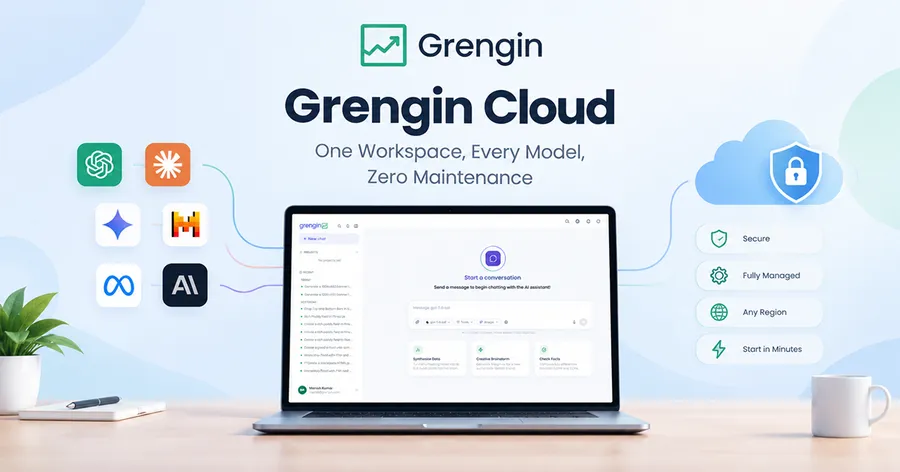
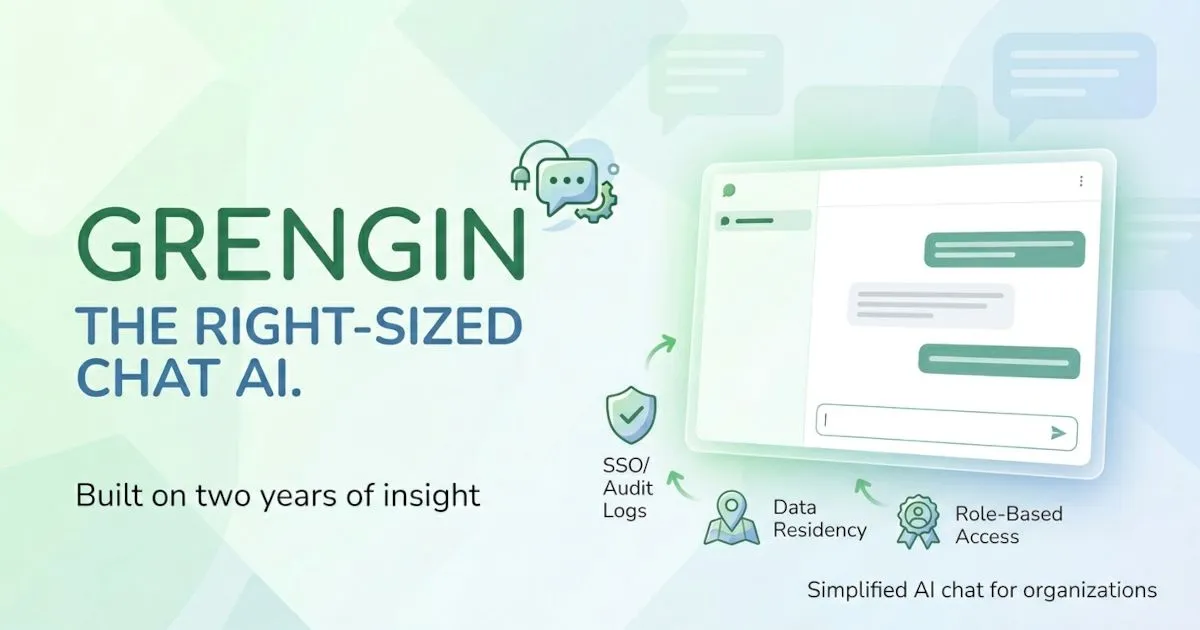
Just chat. With the models you want. With your own keys if you want them. With the controls a real organization needs - SSO, audit logs, data residency, role-based access - but without the operational weight of standing up an entire platform.
That’s Grengin.
What we deliberately left out
The temptation, when you build something like this, is to keep adding. Plugins. Agents. A marketplace. An IDE. We’ve said no to most of it, on purpose.
We’re not trying to replace the deep-integration tools for the orgs that genuinely need them. If your finance team lives inside Excel and Copilot’s Excel agent is going to save them eight hours a week, buy Copilot. Genuinely. We’re not the answer for that.
We’re trying to be the right-sized answer for the much larger group of people whose actual need is: I want to ask an AI model questions, securely, at work, without the org spending six figures or my platform team spending six weekends.
What the consulting work taught me
If I had to compress two years of engagements into one sentence, it would be this: most organizations don’t have an AI problem, they have a fit problem. They bought, or built, something that doesn’t match how their people actually work. The tool isn’t bad. The match is bad.
Grengin is what happens when you design backwards from the actual usage pattern - chat, mostly, with a few sensible extras - instead of forwards from a vendor’s roadmap or an open-source project’s feature list.
It turns out a lot of people just need chat. We thought we’d build the thing that gave it to them, well.
If any of this sounds familiar - the unused Copilot licenses, the LibreChat instance nobody wants to own, the gap in between - we’d love to hear about it. That’s still where the best product feedback comes from.